Selecting the right gas cylinder is critical for safety, efficiency, and performance. One of the most common questions across medical, industrial, and specialty gas sectors is the difference between a high-pressure gas cylinder and low-pressure cylinders. While both are designed to store and transport gases, their applications, construction, and operating conditions vary significantly.
This guide explains their key differences, typical uses, and how to choose the right option for your needs.
Understanding a High-Pressure Gas Cylinder
A high-pressure gas cylinder is designed to store gases at very high pressures, often ranging from 150 bar up to 300 bar or more, depending on the application and standard.
Key Characteristics of a High-Pressure Gas Cylinder
- Designed for compressed gases
- Manufactured using seamless construction for strength
- Requires strict compliance with international safety standards
- Typically fitted with precision valves and regulators
Common Applications of a High-Pressure Gas Cylinder
- Medical oxygen and nitrous oxide supply
- Scuba diving and breathing air systems
- Calibration and specialty gas mixtures
- Industrial gases used in welding, cutting, and manufacturing
- Firefighting and emergency breathing apparatus
Because of their ability to store large volumes of gas in a compact size, high-pressure cylinders are ideal where portability and reliability are essential.
What Are Low-Pressure Cylinders?
Low-pressure cylinders are designed to store gases or liquefied gases at comparatively lower pressures. These cylinders rely more on gas volume and phase change rather than compression.
Key Features of Low-Pressure Cylinders
- Operate at significantly lower pressure levels
- Often used for liquefied or dissolved gases
- Generally larger in size for the same gas quantity
- Simpler pressure control requirements
Typical Uses of Low-Pressure Cylinders
- Refrigerant gases
- Certain industrial and chemical applications
- Fire suppression systems using liquefied agents
- Specialty processes where high pressure is not required
Low-pressure cylinders are preferred when gas properties or system design do not demand high compression.
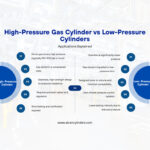
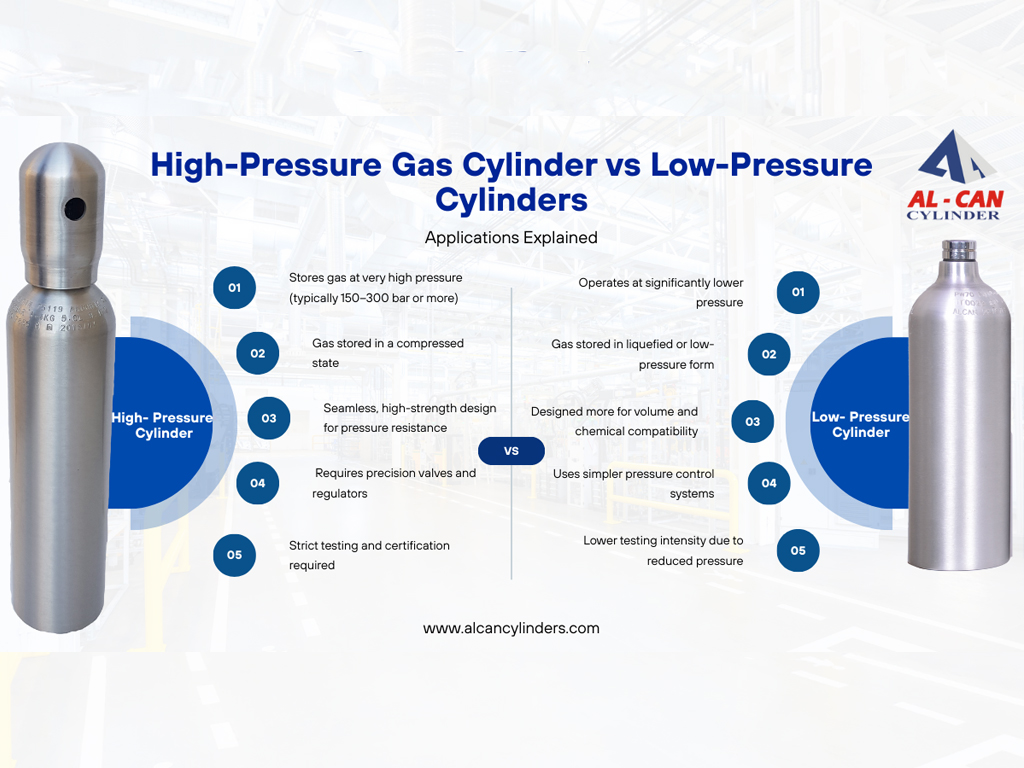
High-Pressure Gas Cylinder vs Low-Pressure Cylinders: Core Differences
Pressure & Storage Method
A high-pressure gas cylinder stores gas in a highly compressed state, while low-pressure cylinders often store gas in liquefied or partially liquefied form.
Size & Portability
High-pressure cylinders can store more usable gas in a smaller volume. Low-pressure cylinders generally require larger sizes to store the same quantity of gas.
Material & Design
High-pressure designs demand advanced materials and precise manufacturing. Low-pressure designs focus more on volume handling and chemical compatibility.
Safety & Regulation
Both types are regulated, but high-pressure cylinders face stricter testing, inspection, and certification requirements due to the stored energy involved.
Choosing Between a High-Pressure Gas Cylinder and Low-Pressure Cylinders
When to Choose a High-Pressure Gas Cylinder
- When space and portability are critical
- For medical, breathing, or life-support applications
- For precision gas delivery and calibration
- When consistent pressure output is required
When Low-Pressure Cylinders Are the Right Choice
- For liquefied gases used in industrial processes
- When high flow volume is more important than pressure
- For fixed installations with ample space
Selecting the correct cylinder type ensures operational efficiency and minimizes safety risks.
Safety Considerations for Both Cylinder Types
Handling and Storage
- Always store cylinders upright and secured
- Protect valves from damage during transport
- Follow manufacturer and regulatory guidelines
Inspection and Testing
- High-pressure cylinders require frequent testing due to higher stress levels
- Low-pressure cylinders must be checked for corrosion and leakage
Proper maintenance extends service life and ensures safe operation.
Final Thoughts
Understanding the difference between a high-pressure gas cylinder and low-pressure cylinders helps businesses make informed decisions based on application, safety, and efficiency. Each type serves a specific purpose, and choosing the right one enhances performance while meeting regulatory requirements.
For industries ranging from healthcare to industrial manufacturing, selecting the appropriate gas cylinder is not just a technical decision but a critical safety choice.